
Block paving is one of the most popular driveway choices, and for good reason. It's hard-wearing and it looks smart. If part of it is ever damaged, the blocks can be lifted and relaid. We lay block paving driveways all over Harpenden, including Kinsbourne Green and West Common. We also work in nearby Redbourn, Wheathampstead and St Albans.
This page covers block types, patterns, how we lay a driveway that stays level, and how to look after it. When you're ready, we'll come out for a free site survey and give you a clear written quote. There's no deposit to pay.
Call 01582 932001, or call or WhatsApp 07747 430338, email hello@5stardrivewaysandpatios.co.uk, or get your free quote.
Why choose block paving?
1. Hard-wearing. A well-laid block paving driveway copes with cars every day.
2. Lots of choice. There are many colours, sizes and textures, and several laying patterns.
3. Easy to put right. Single blocks can be lifted and relaid, so a problem area doesn't mean a new driveway.
4. A smart finish. Borders, bands and contrasting blocks let you add detail.
5. Works with everything else. Matching paths, patios and steps tie the front of the house together.
Block paving or another surface?
Block paving isn't the only option, so it's worth knowing how it compares.
1. Against resin bound. Resin is smoother and porous. Block paving gives more choice of pattern and colour, and is easier to patch.
2. Against tarmac. Tarmac is plainer and suits long runs. Block paving has more detail and makes more of the front of the house.
3. Against imprinted concrete. Both offer patterns, but block paving can be lifted and relaid, and concrete can't.
See our driveways page for the full comparison.
Block types and colours
Blocks come in different sizes, thicknesses and finishes. Some are crisp and modern. Others are tumbled, with softened edges for a more weathered look. Colours range from reds and buffs to greys and charcoals, and many ranges come in blends that mix two or three shades.
Laying patterns
The pattern changes both the look and the strength of a driveway.
1. Herringbone. Blocks laid in a zigzag. They lock together well, so it's a strong choice for driveways.
2. Basketweave. Blocks laid in pairs at right angles. A traditional look, usually better for paths and patios.
3. Stretcher bond. Blocks laid in rows, like brickwork. Simple and tidy.
4. Borders and bands. A contrasting edge, or a band through the middle, to frame the drive.
We'll recommend a pattern that suits the size and use of your driveway.
Built to stay level
Most block paving problems, like sunken areas, ruts and loose blocks, come from what's underneath, not from the blocks. That's why we put the time into the base.
1. Digging out to the right depth for the ground and the use.
2. A compacted sub-base, so it won't settle under the weight of cars.
3. Firm edging, which stops the blocks spreading.
4. A sand bed, screeded level and to the right slope.
5. Jointing sand, brushed in and compacted, which locks the blocks together.
Drainage and planning
A block paved driveway needs to slope gently away from the house. Where the water can't run onto a lawn or border, we fit channel drains or a soakaway.
For a front garden, you usually don't need planning permission if the water runs off onto a lawn or border, or soaks away on your own land. A solid surface over 5 square metres that drains nowhere else normally needs permission. Flats have different rules. You can read the government guidance on paving front gardens.
What affects the cost of block paving?
We don't publish prices, because every driveway is different. The main things that affect the cost are:
1. Size. The area to be paved.
2. Blocks. The range, colour and thickness.
3. Pattern and borders. More cutting and detail takes longer.
4. Digging out and the base. How much has to come up, and how deep the base needs to be.
5. Drainage. Channel drains or a soakaway.
6. Access. How easily machinery and materials can reach the driveway.
7. Walls, steps and edging. Anything that finishes the job.
Book a free site survey and we'll give you a clear written quote, with no obligation.
How we lay a block paving driveway
1. Survey. We visit, measure up, check the levels and drainage, and talk through blocks and patterns.
2. Written quote. A clear quote with everything set out. No deposit.
3. Digging out. We take up the old surface and dig to the right depth.
4. Sub-base. We lay and compact the sub-base.
5. Edging and drainage. We set the edging firmly and fit drainage where it's needed.
6. Sand bed. We screed a level bed of sand to the right slope.
7. Laying and cutting. We lay the blocks to your pattern and cut them neatly at the edges.
8. Jointing and compacting. We brush in jointing sand and compact the surface.
9. Clean-up and handover. We clear the site and explain the aftercare.
Looking after block paving
1. Sweep it regularly, to keep the joints clear of dirt and seeds.
2. Pull weeds early, before their roots take hold.
3. Top up the jointing sand if it washes out, especially after jet washing.
4. Think about sealing. A sealer can help with stains and keep the jointing sand in place.
5. Clean up oil quickly with a suitable cleaner.
Our driveway cleaning service can jet wash, re-sand and seal block paving.
Walls, paths and patios to match
Block paving goes well with matching garden walls, including brickwork and pillars. It also goes well with paths and steps in the same blocks.
Recent block paving
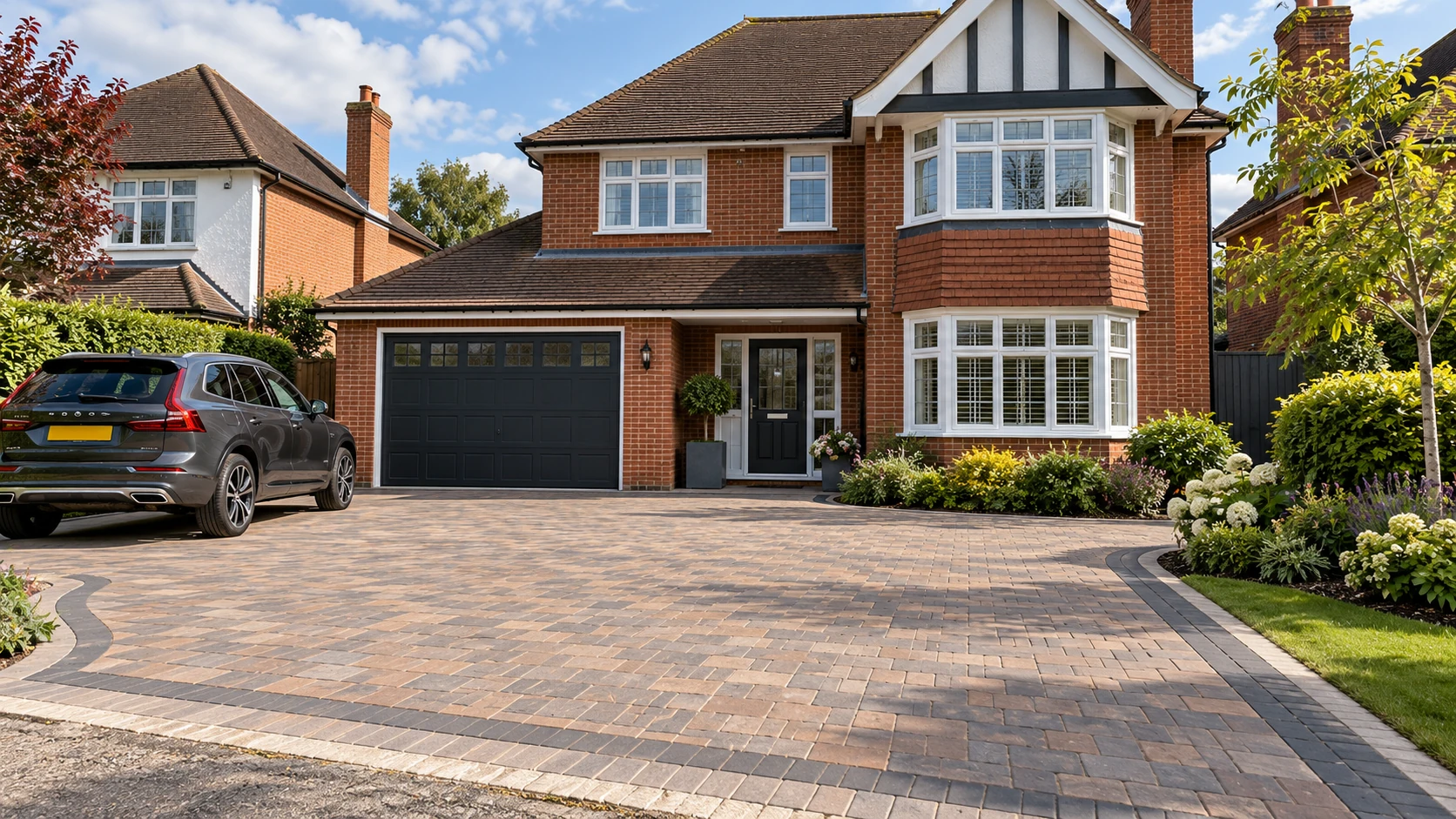
See more in our photo gallery.
Questions about block paving
Which block paving pattern suits my home?
Herringbone is the strongest for driveways. Borders and bands add detail. We'll suggest options on the survey.
Why does block paving sink?
It's usually a weak or thin base. That's why we put the time into a proper sub-base.
How do you stop weeds coming through block paving?
Keep the joints full of sand and sweep regularly. Sealing helps too.
Should block paving be sealed?
It's up to you. Sealing helps with stains and keeps the jointing sand in place.
Do I need planning permission for block paving?
For a front garden, it depends on where the water goes. See the notes above. We'll go through it on the survey.
How long does a block paving driveway take?
Most jobs are completed within a working week, Monday to Friday.
Is block paving covered by the 10-year guarantee?
Yes. Our 10-year guarantee covers our driveways, patios and walls. The details are set out with your written quote.
Areas we cover
We lay block paving in Harpenden and 23 nearby towns. See our areas page or our Harpenden driveways page.
Get your free quote
Tell us a little about the job and we'll arrange a free site survey and a clear written quote. There's no deposit to pay and no obligation.
Prefer to talk it through? Call 01582 932001, or call or WhatsApp 07747 430338. You're welcome to send photos of your driveway or garden on WhatsApp first.