
Tarmac gives a smooth, plain, practical finish. It's a good fit for wide driveways and long runs. We lay tarmac driveways for homes in Harpenden and across Hertfordshire, including Wheathampstead, Redbourn and St Albans.
Read on to find out what tarmac is, how it stacks up against other surfaces, how a tarmac drive is laid and how to care for it. We'll visit for a free site survey and put your quote in writing, and we never ask for a deposit.
Call 01582 932001, or call or WhatsApp 07747 430338, email hello@5stardrivewaysandpatios.co.uk, or get your free quote.
What is tarmac?
Tarmac is the everyday name for asphalt. It's crushed stone mixed with bitumen, a thick black binder. It goes down hot, is spread out evenly, then is rolled firm. As it cools, it hardens into one smooth surface.
Why pick tarmac?
1. Made for cars. Tarmac is a hard-wearing surface for everyday parking.
2. Smooth to use. An even surface for walking, bikes, buggies and wheelchairs.
3. Good for big areas. On a wide or long drive, there's far less cutting than with blocks.
4. A clean look. A plain finish that sits well with most homes.
5. Easy to care for. A sweep now and then keeps it tidy.
How does tarmac compare?
1. Tarmac and block paving. Blocks give you patterns and colours. Tarmac is simpler, and suits a long run.
2. Tarmac and resin bound. Resin bound is porous and comes in lots of stone colours. Tarmac is solid, so rainwater has to be sent somewhere.
3. Tarmac and gravel. Gravel is loose and can move about. Tarmac gives one firm, even surface.
Our driveways page puts every surface side by side.
Edges that finish the job
Tarmac needs a firm edge to hold it in shape. The edge also frames the drive. Block or brick edging gives a crisp line and can smarten up a plain surface. On the survey, we'll show you what would suit your home.
What goes underneath
The part you can't see matters most. Under every tarmac drive we lay:
1. A compacted sub-base, to take the weight of cars.
2. Firm edging, to hold the tarmac in place.
3. A gentle slope, to send rainwater away from the house.
Rainwater and planning
Tarmac doesn't let water through, so where the water goes needs planning. We tilt the drive gently away from the house. If the water can't run onto a lawn or border, we fit channel drains, or soakaways where the ground allows.
For a front garden, you usually don't need planning permission if the water runs off onto a lawn or border, or soaks away on your own land. A solid surface over 5 square metres that drains nowhere else normally needs permission. Flats have different rules. Listed homes and conservation areas may have extra rules, so check with your local council. You can read the government guidance on paving front gardens.
What affects the cost of a tarmac driveway?
We don't publish prices, because every driveway is different. For tarmac, the cost mostly comes down to:
1. The area. How big the drive is.
2. The old surface. How much needs lifting and removing.
3. The sub-base. What the ground and the use need.
4. Edging. Which edging or border you choose.
5. Water. Whether channel drains or a soakaway are needed.
6. Getting in. How easily machinery and materials can reach.
Book a free site survey, and you'll get a clear written quote with no obligation.
How a tarmac drive is laid
1. Survey. We measure up, look at levels and drainage, and talk about edging.
2. Quote. Everything is set out in writing, and we never ask for a deposit.
3. Clearing. The old surface comes up and is taken away.
4. Sub-base. We lay the sub-base and compact it.
5. Edging and drainage. The edging is set firmly, and drainage goes in where it's needed.
6. Tarmac. The hot tarmac is spread out evenly.
7. Rolling. We roll it smooth and tidy the edges.
8. Handover. We clear up and talk you through the aftercare.
Most jobs are completed within a working week, Monday to Friday.
Caring for a tarmac drive
1. Sweep it now and then, so leaves and dirt don't build up.
2. Wipe up oil or fuel quickly, because they can soften tarmac.
3. Pull out weeds at the edges while they're small.
4. Go gently for the first few weeks. New tarmac can scuff, mostly on hot days. Try not to turn the steering wheel while the car is standing still.
When it needs a deeper clean, our driveway cleaning service can help.
A wall to go with it
A matching front wall can finish off a new tarmac drive. We build garden walls, including brickwork and pillars, built to match your home. Where the ground changes level, we also build retaining walls.
Recent tarmac driveways
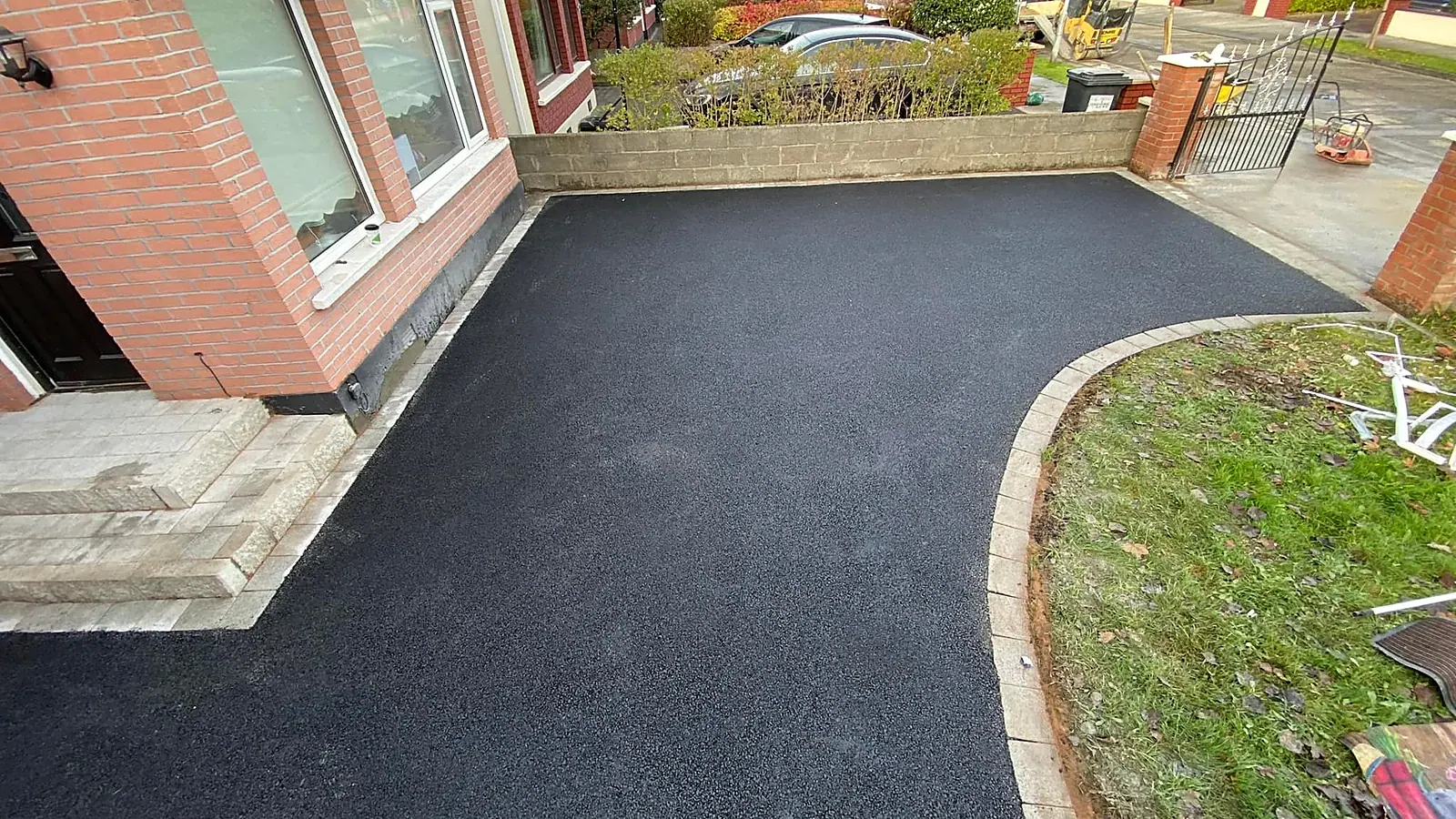
See more in our photo gallery.
Tarmac questions
Does water soak through tarmac?
No. Tarmac is solid. We lay it to a slope and add drainage where it's needed.
What if my drive slopes towards the house?
We can set the levels of a new drive to lead water away from the house, where the site allows. A channel drain across the drive can catch water before it reaches the door.
Is planning permission needed for a tarmac front drive?
It depends on where the water goes. See "Rainwater and planning" above. We'll talk it through on the survey.
Why can new tarmac get marked?
Fresh tarmac is softer for a while, mostly in hot weather. Turning the wheel while the car is still can scuff it.
How long does a tarmac driveway take?
Most jobs are completed within a working week, Monday to Friday.
What does the 10-year guarantee cover?
Our 10-year guarantee covers the driveways, patios and walls we build. There's no deposit. See our guarantee and insurance page.
Areas we cover
We lay tarmac driveways in Harpenden and 23 nearby towns. See our areas page or our Harpenden driveways page.
Get your free quote
Tell us a little about the job and we'll arrange a free site survey and a clear written quote. We never ask for a deposit, and there's no obligation.
Prefer to talk it through? Call 01582 932001, or call or WhatsApp 07747 430338. You're welcome to send photos of your driveway or garden on WhatsApp first.